
Nizhny Novgorod at 805: A City That Has Always Brought People Together
A City That Lives Through People in Motion
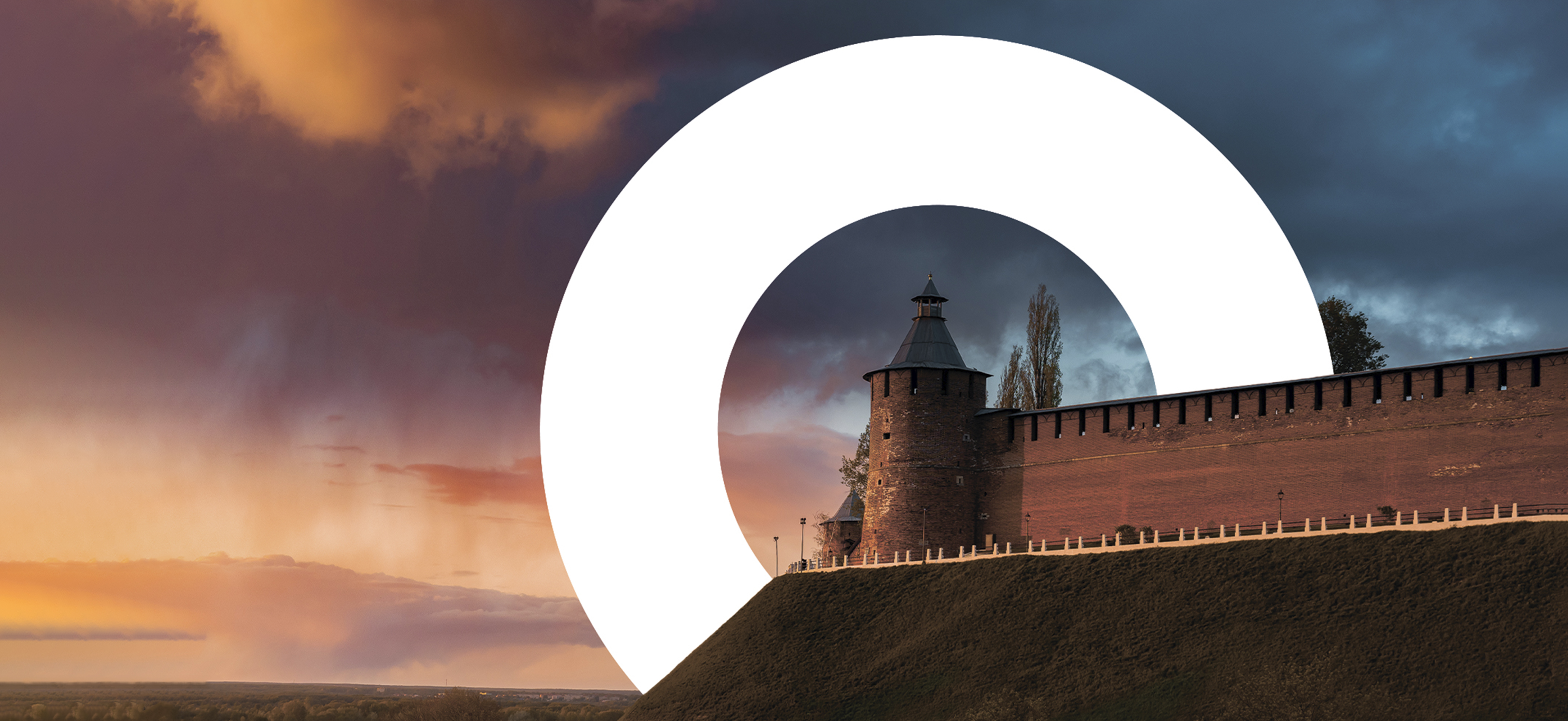
The history of Nizhny Novgorod can be read as a story of people in motion. Ships came up the Volga and Oka, merchants traveled to the fair, important decisions were made inside the Kremlin, and workshops and factories produced goods that helped shape the country's development. Today, different crowds move along the same streets - heading to work, university, a museum, school pickup, or simply home.
On August 15, 2026, Nizhny Novgorod celebrates 805 years since its founding. The city dates back to 1221, when Grand Prince Yuri Vsevolodovich of Vladimir established a fortress at the mouth of the Oka.
But once we look beyond a list of dates and events, another question emerges: Why has this city, century after century, kept becoming a place where people and routes meet?
A City Born at a Crossroads
At first, Nizhny Novgorod was above all a fortress. Its location was strategic: the city controlled important routes linking the Russian lands, the Volga, and territories to the east. Geography set much of the course for what came next.
Over time, the fortress grew into a city of trade.
Ships traveled along the Volga and Oka, merchants came to Nizhny Novgorod, markets took shape, and churches and homes were built. In the 14th century, the city became the capital of the Grand Principality of Nizhny Novgorod-Suzdal.
Later, trade would turn Nizhny Novgorod into one of Russia's most important economic centers.
In 1817, the famous fair was moved to Nizhny Novgorod. It grew into a vast marketplace drawing goods and people from different regions and countries. With the Volga as its main artery, the city became a natural link between European Russia and the East.
On some days, the fair drew as many as 150,000 to 200,000 visitors - an extraordinary number for a 19th-century city.
In effect, Nizhny Novgorod was already an international hub.
Where Russian History Becomes a Story of People
Another defining feature of Nizhny Novgorod is that its history is shaped not only by trade and politics, but also by people who, at critical moments, took responsibility for the country's future.
One of the best-known examples is Kuzma Minin.
In 1611, the local civic leader from Nizhny Novgorod became one of the organizers of the people's militia led by Prince Dmitry Pozharsky. The city still carries the memory of those events: a monument to Minin and Pozharsky stands on National Unity Square, while Minin's tomb is inside the Nizhny Novgorod Kremlin, in the Cathedral of the Archangel Michael.
For people today, this story matters as more than a page in a history book.
It points to a lasting part of the city's character: there has long been room here for individual initiative and responsibility toward others. The ability to come together around something seen as a shared cause is part of Nizhny Novgorod's identity, too.
From Merchant City to Industrial Center
Nizhny Novgorod has never stood still.
Trade gradually gave way to industry as another force shaping the city. During the 19th and 20th centuries, manufacturing, transport, and shipbuilding expanded, followed later by the automobile and aviation industries. New technologies were developed here, alongside strong engineering and scientific traditions.
During World War II, Gorky became one of the country's key industrial centers.
In the Soviet period, Nizhny Novgorod had another name: Gorky. From 1959 to 1991, the city was closed to foreign visitors. That period stands in sharp contrast to the city today. Nizhny Novgorod is once again open to international exchange, hosts business and cultural events, and remains one of Russia's major urban centers.
There is an almost paradoxical turn in that story.
For centuries, the city had been a meeting point for merchants and travelers. Then, for several decades, it was closed off from the outside world. Eventually, it returned to its historical role: a place where people, ideas, cultures, and business connections come together.
Through every transformation, however, Nizhny Novgorod retained one essential quality: its importance to the life of a vast country.
Why Nizhny Novgorod Appeals to People Considering a Life in Russia
Anyone thinking about a move asks practical questions:
- Where will the children study?
- What are the job opportunities?
- What does everyday life look like?
- Is there a rich cultural environment?
- Can I find a community of my own?
- How easy is it to stop feeling like a temporary visitor and begin to feel like a resident?
This is where Nizhny Novgorod's history takes on practical meaning.
The city's character was shaped by trade, industry, education, crafts, culture, and the constant movement of people.
Its architecture tells the same story. Ancient churches, merchant houses, and Soviet-era buildings can share a single street, while nearby, new public spaces and contemporary urban projects continue to appear.
In 2024, Nizhny Novgorod became Russia's first "Cultural Capital of the Year." The federal designation was awarded through a competition that assessed, among other things, historical and cultural heritage, museums, theaters, the urban environment, education, innovation, and creative industries.
That title captures something essential about Nizhny Novgorod today: its past does not sit apart from the present.
805 Years of a City That Still Welcomes New People
Over eight centuries, Nizhny Novgorod has been a fortress, a princely capital, a merchant city, an industrial powerhouse, and a closed Soviet city. Its name, economy, boundaries, technologies, and pace of life have all changed.
One thing has remained: its place at the crossroads and its ability to bring people together.
Once, merchant caravans arrived along the Volga. Today, professionals, entrepreneurs, families, and people considering Russia as a place to build a long-term life come to Nizhny Novgorod.
The city's history is a reminder that a city is more than walls, streets, and monuments.
It is the people who lived here before us, those who live here today, and those who may one day call it home.
Eight hundred and five years is a long history. For a city, though, it is not an ending. It is simply another chapter.

